
Sport Quiz
-
![]()
Football Saturday
A1 Beginner
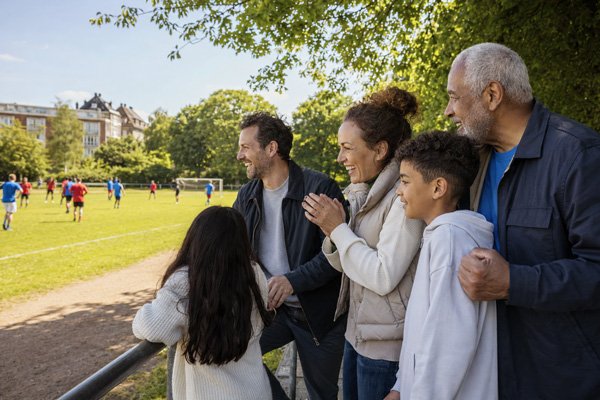
It is football day! Join Andy and his friends for a Saturday morning in the park.
-
![]()
Abby’s First Match
A2 Elementary
Abby goes to her first football match and discovers that the day is about more than the game.
-
![]()
Why Football Brings People Together
B1 Intermediate
Explore why football means more than winning, and how it connects families, friends and communities around the world.
-
![]()
A City United by Football
B2 Upper Intermediate
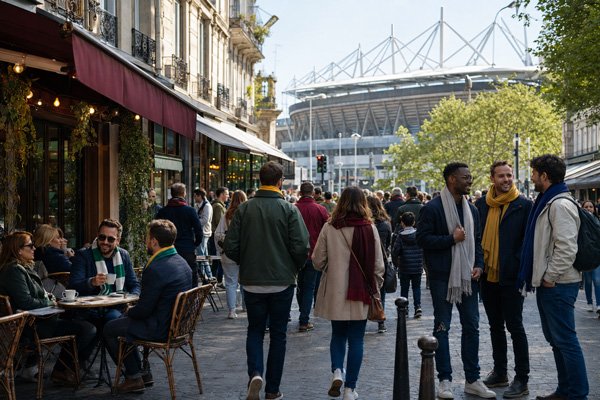
Discover how match day transforms a city, supports local businesses and creates a powerful sense of belonging.
-
![]()
Has Modern Football Changed Forever?
C1 Advanced
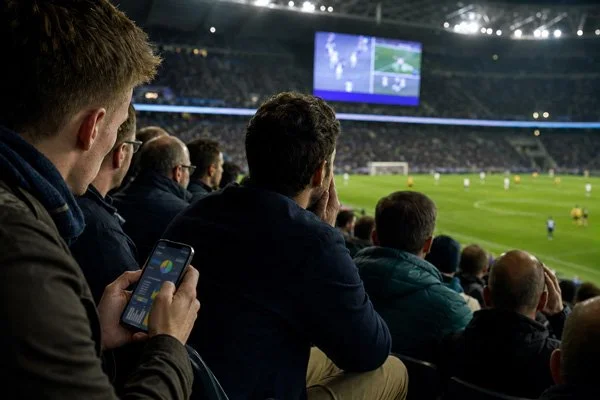
Explore how technology, social media and modern analysis are changing football, and whether the heart of the game remains the same.
-
![]()
The Beautiful Game
C2 Proficient
Explore why football still matters in a world shaped by technology, personalised entertainment and constant change.


Why Does Football Still Matter?
This reading activity is for C2 proficient-level English learners.
Consider why football continues to create powerful shared experiences, and what its enduring appeal reveals about community, uncertainty and human connection.
Read the article and refer to Useful Language for explanations of key words and phrases. Then start the quiz and explore the ideas and language in more depth. Good luck! ⚽
The Beautiful Game
Why uncertainty still matters in a world designed around choice
There are few experiences that can persuade complete strangers to celebrate together.
In most areas of life, people move through cities without speaking to one another. They share buses, trains, cafés and public spaces while remaining politely distant. Yet on certain afternoons, that distance disappears. A last-minute goal is scored, and suddenly thousands of people who have never met are embracing, singing and laughing as though they have known one another for years.
But football's ability to bring people together is not, in itself, especially mysterious. Concerts, festivals and public celebrations can do the same. The more interesting question is why millions of people continue to value an experience that gives them almost no control over what happens next.
We live in an age increasingly organised around personal choice. Films arrive instantly on demand. Music follows us wherever we go. Social media provides a continuous stream of stories, opinions and distractions selected partly according to our previous behaviour. Streaming services remember what we watched, algorithms learn what we like and unwanted content can simply be skipped.
Football asks something rather different.
It asks people to surrender control and experience uncertainty together.
Nobody, not the supporters, the players, the coaches or even the commentators, knows exactly how the next ninety minutes will unfold. A team expected to win comfortably can collapse. A player who has barely touched the ball can decide the match with a single moment of brilliance. Months of expectation can disappear with one unfortunate mistake.
That uncertainty cannot be personalised. It cannot be adjusted to suit our preferences. Most importantly, it belongs equally to everyone watching.
Perhaps this explains why live sport continues to feel different from almost every other form of entertainment. A recorded match rarely carries the same emotional weight once the result is known. The images may be identical, but the experience is not. Knowledge of the outcome changes the meaning of everything that comes before it.
There is a strange contradiction here. Much of modern life is designed to remove inconvenience and uncertainty. We expect accurate directions before beginning a journey, immediate information when something changes and recommendations designed around our individual tastes. These developments make life easier, yet football suggests that predictability is not always what people value.
The nature of anticipation depends partly on not knowing.
This may also explain why football continues to resist becoming an entirely digital experience. A supporter can watch a match from home with an excellent view, instant replays and detailed analysis. Attending in person may involve expensive tickets, crowded trains, bad weather and a seat that offers a worse view than the television.
Yet people continue to travel across cities and countries to be there.
From a purely practical perspective, this behaviour can seem difficult to justify. But convenience has never been the only measure of value. The journey, the familiar streets around the stadium, the conversation before kick-off and even the inconvenience itself can become part of the experience.
These rituals serve little practical purpose, but that does not make them meaningless.
In fact, their apparent inefficiency may be part of their attraction. People are choosing to participate in something rather than simply consume it. They cannot skip the boring parts, guarantee a satisfying conclusion or experience precisely the version of the afternoon they would prefer.
They have to accept what happens.
This willingness to surrender control may seem unusual in a culture increasingly built around personalisation. Yet it can also create something difficult to reproduce individually: the knowledge that thousands of other people are experiencing the same uncertainty at exactly the same moment.
Football therefore creates a peculiar form of temporary equality. Supporters may arrive at the stadium with completely different lives, backgrounds and expectations, but none of them knows the result. Money, status and expertise cannot purchase advance knowledge of what will happen next.
For a short period, everyone waits together.
This does not mean that football should be romanticised. Professional sport is a global industry shaped by enormous financial interests, commercial pressures and increasingly sophisticated technology. Nor does every supporter experience football in the same way. The idea of a perfectly united crowd is itself something of a simplification.
Nevertheless, the persistence of these shared rituals is striking.
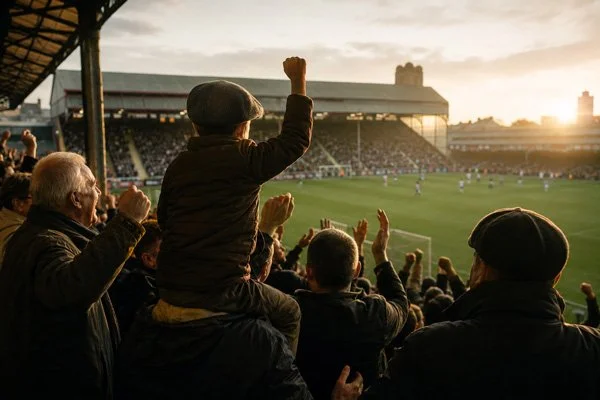
Parents still introduce children to clubs they supported decades earlier. Friends still arrange their weekends around kick-off times. People still travel enormous distances to attend matches they could watch more comfortably at home. Entire cities can still seem to breathe differently when an important match is about to begin.
Perhaps football's significance, then, does not lie only in trophies, league tables or extraordinary goals. Those things matter, but they form part of something larger.
What remains years later may also be the conversation on the journey home, familiar songs echoing around an old stadium, a child standing on a seat to catch a first glimpse of the pitch, or the memory of thousands of people waiting for something none of them could predict.
In an increasingly personalised world, that may be football's most remarkable achievement.
Not because it gives us what we want.
But because, for a while, it asks us to accept that we do not know what comes next, and to experience that uncertainty together.
Useful Language
continuous stream
A flow of information or content that continues without stopping.
surrender control
To accept that you can no longer control what happens.
unfold
To develop or become known gradually.
emotional weight
The emotional importance or effect that something carries.
nature of anticipation
The essential character of the feeling created by waiting for something to happen.
measure of value
A way of judging how important, useful or worthwhile something is.
serve little practical purpose
To have little obvious practical use or benefit.
apparent inefficiency
Something that seems unnecessarily slow, difficult or inconvenient.
satisfying conclusion
An ending that gives the result or feeling someone hoped for.
temporary equality
A situation in which differences between people temporarily become less important or relevant.
commercial pressures
Financial or business demands that influence decisions or behaviour.
persistence
The fact that something continues to exist or happen despite change or difficulty.
shared rituals
Repeated activities or traditions that people experience together.